
What is Scotopic Sensitivity Syndrome?

Scotopic Sensitivity Syndrome also referred to as Irlen Syndrome after Helen Irlen, who in the early 1980s discovered that some people with poor reading showed a marked and immediate improvement by overlaying the pages of text with a coloured semi-transparent plastic sheet. Furthermore, in the early 1980s New Zealand teacher Olive Meares independently described the visual distortions some individuals reported when reading text on white paper hence Scotopic Sensitivity Syndrome is also known as Meares-Irlen Syndrome. Additionally the condition is sometimes called 'visual stress' (n.b. the underlying condition is not caused by mental stress or anxiety). Informally, this condition is often referred to as 'visual static', 'visual snow' or 'snowy vision'.
Scotopic Sensitivity Syndrome is a neurological condition (not a learning disability) caused by the brain and/or eye incorrectly processing/interpreting what the eye is seeing. Some estimates suggest that, to varying degrees, up to 12% of the population may experience these visual disturbances. Scientific knowledge has not yet advanced enough to fully describe the neurological mechanisms causing these visual disturbances. It is possible that a person could have Scotopic Sensitivity Syndrome without having any other condtitions/symptoms. However often Scotopic Sensitivity Syndrome afflicts people with Dyslexia or Autism Spectrum Disorder. In general people with Dyslexia may have problems seeing text on a page. Whereas people on the Autism Spectrum, although perhaps able to read, may have problems with correctly interpreting their surroundings due visual defects such as Scotopic Sensitivity Syndrome. For unknown reasons some people appear to develop visual snow in adulthood, especially during their late teenage years or early twenties.
Standard eyesight tests performed by an optometrist do not routinely detect visual snow since they are not designed to detect this condition. Furthermore many medical professionals (eg. local family doctors, neurologists) and educationalists are unaware of Scotopic Sensitivity Syndrome and its effects (eg. headaches from reading). Conversely, awareness of this condition is now much more widespread and it is recognised by many employers (esp. large companies), educational institutions and schools. Anyone experiencing a significant degree of visual snow will have increased difficulty reading and studying.
The main symptoms associated with Scotopic Sensitivity Syndrome are:
- Light Sensitivity which causes discomfort or difficulty under the following conditions:
-
- glare from lights (eg. from on-coming car headlights, bright desk lamp)
- glare from surfaces (eg. glaring spots of sunlight on car paintwork)
- fluorescent lights (includes many types of energy saving bulbs)
- bright sunlight
- Contrast problems which occur when the difference between light and dark is very pronounced, for instance:
-
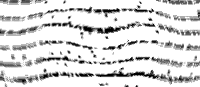
- Black text or a white background may appear to move, sometimes violently.
- Vertical or horizontal window blinds can appear to vibrate violently. It may not be possible for someone with Scotopic Sensitivity Syndrome to see past the blinds properly.
- Stripy and bold patterns such as those on some clothes, carpets and wallpaper, etc. may appear to move/vibrate and some patterns may even look three dimensional instead of flat.
- These effects of Scotopic Sensitivity Syndrome make reading such things as text, music, graphs, maps much more difficult and potentially tiring; they may also cause considerable eye ache.
- Restricted field of clear vision
-
- In the context of reading, a restricted field of view causes only a few letters on a page to appear clear, the rest of the page appears slightly out of focus; these focusing problems are not due to short/long sightedness or any physical optical problem with the eye. For example, when I read a sentence I can sometimes only clearly see a couple of letters simultaneously. Depending on the severity of Scotopic Sensitivity Syndrome it can severely limit a person's ability to read quickly or skim over a page of text. Being unable to see whole words makes it harder to recognise words quickly.
- Scotopic Sensitivity Syndrome makes it more difficult to keep track of where you are on the page. It is very easy to inadvertently skip to the line below or above. Upon reaching the end of a line it is also hard to find the next line down. I often either skip or re-read a line; using a bookmark helps overcome this.
- If a child learning to read sees only part of a word, perhaps not always the same part, then it will be difficult for them to learn to read.
- Poor Depth Perception which causes difficulty with judging the distance between objects and from oneself to objects. It causes problems with such things as ball sports, escalators, clumsiness (bumping into objects) and judging heights. I have no perception of height, consequently no fear when looking over bridges, cliffs, etc.
- Attention and concentration difficulties are caused as a result of the aforementioned visual disturbances. Scotopic Sensitivity Syndrome impairs the ability of the individual to read, study and work efficiently. It also often causes the eyes to feel uncomfortable and sometimes painful. This lack of attention may display itself in one or more of the following ways:
-
- difficulty staying on a task when reading or studying
- the need to take frequent, and perhaps long, breaks
- generally feeling of restlessness while studying or reading
- general tiredness and fatigued eyes after reading/studying
- Headaches and Migraines: someone with Scotopic Sensitivity Syndrome is much more susceptible to headaches and migraines which can be triggered by their visual disturbances.
...experience Scotopic Sensitivity Syndrome for yourself!